Risk Communications
Crisis and Emergency Risk Communication (CERC) applies evidence-based principles to support effective communication during public health emergencies, such as the COVID-19 pandemic, with the goal of encouraging public participation in disease prevention and containment. Successful implementation of the CERC framework depends in part on reaching populations with histories of social injustice, health disparities, and limited access to health information. These vulnerable and minority populations often experience communication gaps related to socioeconomic disadvantage, low health literacy, immigration status, and limited English proficiency, compounded by language and cultural discordance. Community-engaged research (CEnR) partnerships are uniquely positioned to operationalize CERC frameworks in these contexts by fostering trust and ensuring messages are culturally and linguistically relevant.
RHCP developed, implemented, and evaluated a community-engaged COVID-19 CERC framework that reached thousands of individuals in Rochester and surrounding areas with timely and accurate information on COVID-19 prevention, containment, and vaccination through bidirectional communication led by trusted community communication leaders. This framework has since been adapted by other partnerships across diverse demographic and geographic settings, and RHCP is collaborating with these groups to develop a pandemic communications toolkit. The goal of this work is to synthesize the experiences of communication leaders and partner organizations into an actionable, adaptable community-engaged CERC toolkit, along with a freely available library of culturally tailored pandemic message maps and content. These resources will be made available to health departments, community organizations, and community-engaged partnerships to support effective communication during future pandemics and other public health emergencies.
Funding
Mayo Clinic: Center for Clinical and Translational Science, and Division of Public Health, Infectious Disease and Occupational Medicine
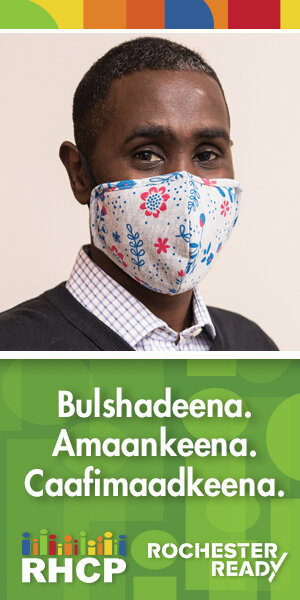
Bidirectional communication between communication leaders and community members within their social networks refined messages, leveraged resources, and advised policy makers to address COVID-19 prevention, testing, and socioeconomic impacts for vulnerable populations in Rochester, Minnesota.